Accelerating App Development With AI-Powered Code Generation
Oct 24, 2025

Natural Prompts To Production With Vibe Studio: Vibe Studio converts descriptive prompts directly into clean, scalable Flutter scaffolds that shorten prototype cycles.
Context-Rich LLMs For Smarter UI And App Logic: OpenAI-powered models embed validation and conditional logic into generated code, reducing specification gaps.
Device-Specific Previews For Responsive Validation: Multi-device previews expose layout and interaction issues early, enabling prompt-driven responsive design.
Developer Mode And Iteration Workflows: An embedded secure VS Code editor supports targeted refinement, hot reload testing, and seamless push-to-repo workflows.
Workflow Benefit: Combining prompt-to-code generation, context-aware LLM outputs, previews, and an integrated editor shortens feedback loops and preserves design intent in code.
Introduction
Accelerating app development with AI-powered code generation shifts teams from manual scaffolding to conversation-driven execution. Steve, an AI Operating System, combines a prompt-to-code studio, context-aware LLMs, form-factor previews, and an embedded developer surface to compress design, prototype, and early engineering cycles. This article shows pragmatic ways Steve shortens feedback loops, preserves intent in code, and enables faster delivery.
Natural Prompts To Production With Vibe Studio
Vibe Studio turns plain-language requirements into production-ready Flutter scaffolds, removing the friction of translating mockups into working UIs. A product manager can describe an onboarding flow, authentication requirements, and accessibility constraints in a single prompt; Vibe Studio generates clean, scalable code that reflects that brief. In practice, this replaces an initial design handoff with an interactive artifact stakeholders can run and critique immediately.
Scenario: a small team needs a minimum viable app to test a subscription funnel. Instead of waiting days for design and engineering alignment, the PM enters requirements into Steve; Vibe Studio outputs a first-pass app that includes navigation, forms, and placeholder integrations. That artifact becomes the baseline for usability tests and early analytics, accelerating decisions and reducing ambiguous specs.
Context-Rich LLMs For Smarter UI And App Logic
Steve’s OpenAI-powered LLMs translate contextual prompts into UI behavior and basic application logic so generated code is intent-aware rather than purely presentational. The models interpret validation rules, conditional flows, and accessibility notes embedded in prompts and produce code that carries those rules as hooks, validators, and state management patterns.
Scenario: a designer requests a profile editor with regional phone validation and password-strength guidance. The LLMs embed validation logic and UI feedback into the generated Flutter code, surfacing edge cases early. Engineers inherit intent-rich implementations, which reduces rework because the code already models expected behavior rather than requiring specification reconstruction from static designs.
Device-Specific Previews For Responsive Validation
Previewing generated apps on device-specific views (mobile, tablet, desktop) ensures the prompt-driven UI adapts correctly across form factors, shortening iteration cycles. Steve’s device previews let teams inspect layout, spacing, and interaction patterns immediately after code generation and before heavy implementation.
Scenario: an e-commerce app needs a navigation pattern that adapts from bottom navigation on phones to a side rail on desktops. The team generates the initial UI via Vibe Studio and uses device-specific previews to compare behaviors. Early visibility into breakpoints and component scaling lets product and design refine prompts, avoiding late-stage rework when developers implement responsive logic.
Developer Mode And Iteration Workflows
When generated code needs production hardening or custom integrations, Developer Mode provides an embedded, secure VS Code editor so engineers can refine implementations without leaving the platform. This preserves traceability: changes remain tied to the original prompt-output cycle and can be re-tested with hot reload and live edits.
Scenario: after reviewing a generated billing screen, an engineer opens Developer Mode to add a third-party payment widget and tweak animation timing. They test changes with hot reload, confirm behavior across device previews, and then push to GitHub. This flow keeps iteration tight—prompt → generated code → targeted customization → versioned push—reducing friction between rapid prototyping and production readiness.
Steve
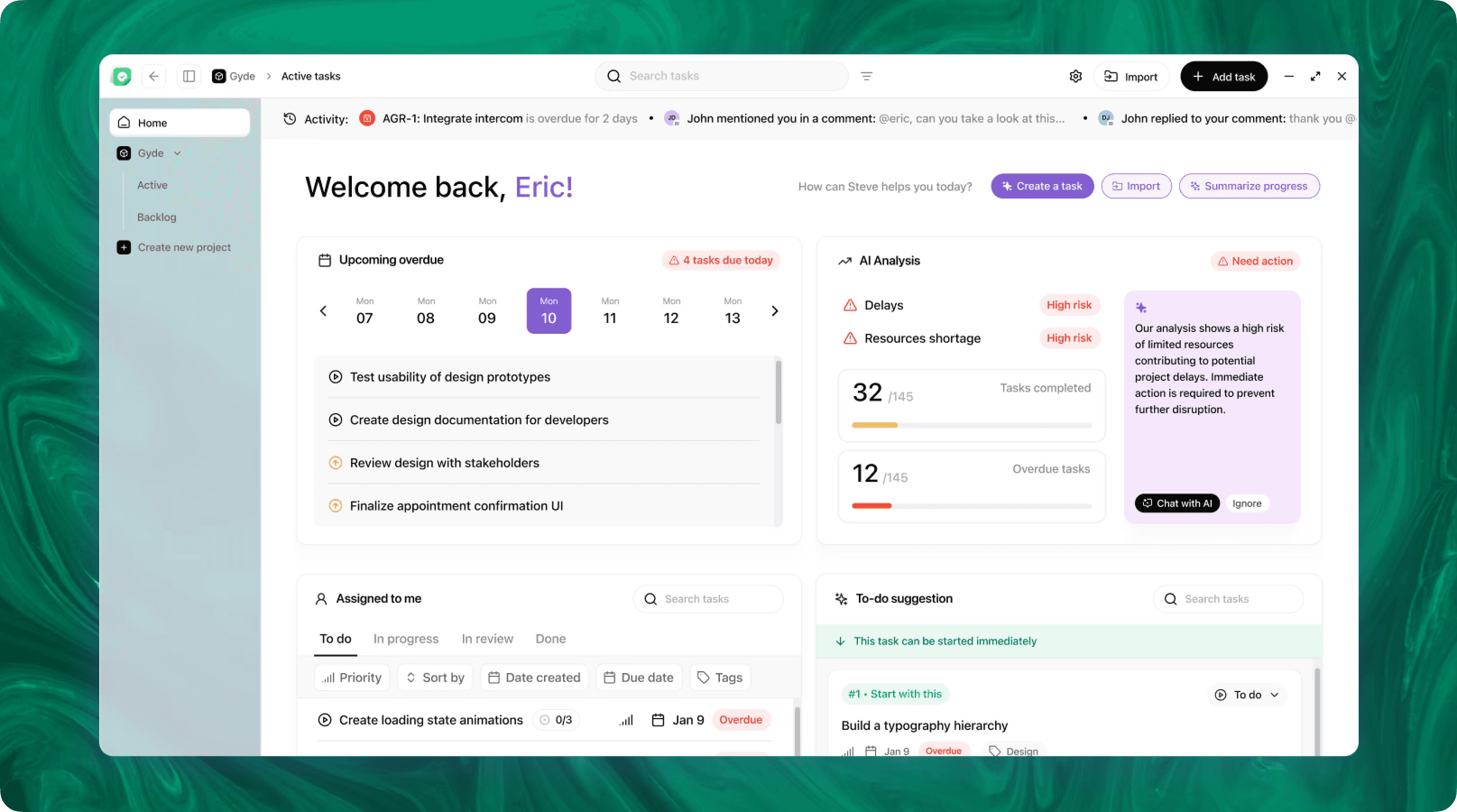
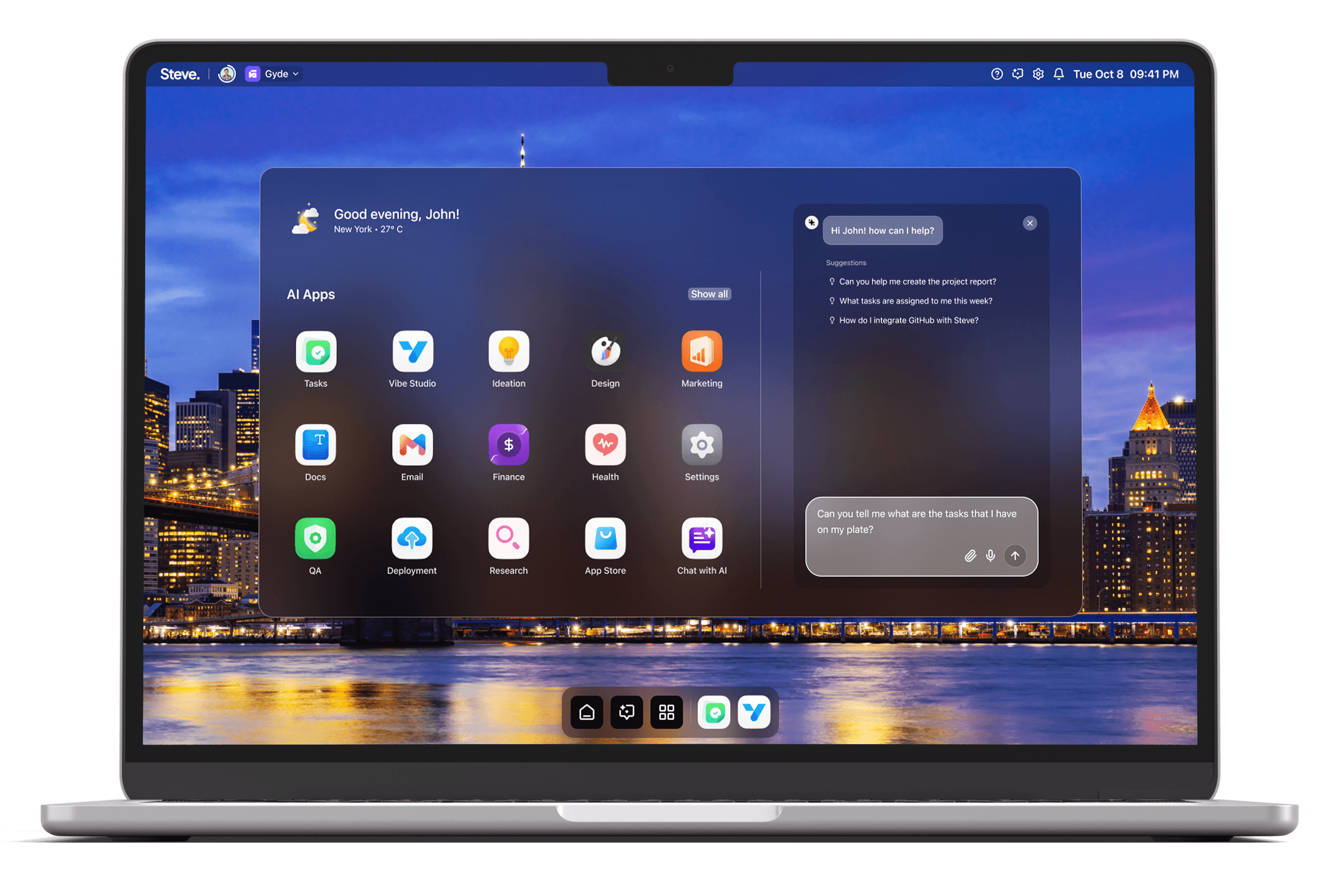
Steve is an AI-native operating system designed to streamline business operations through intelligent automation. Leveraging advanced AI agents, Steve enables users to manage tasks, generate content, and optimize workflows using natural language commands. Its proactive approach anticipates user needs, facilitating seamless collaboration across various domains, including app development, content creation, and social media management.
Conclusion
AI-powered code generation accelerates app development only when it preserves product intent, supports cross-device validation, and enables practical engineering handoffs. As an AI Operating System, Steve brings those elements together: Vibe Studio converts prompts into Flutter scaffolds, OpenAI-powered LLMs encode UI logic and validation, device-specific previews validate responsiveness, and Developer Mode lets engineers refine and ship production-ready code. The result is a faster, more transparent path from idea to deployable artifact that minimizes rework and keeps teams aligned.